
The challenge
Lifeline had evolved beyond a single crisis phone line.
It has:
• Introduced text and online chat services
• Amalgamated with counselling services
• Launched a self-led support toolkit on a separate platform
• Acquired a crisis safety planning mobile app – Beyond Now
• Grown into a federated network of 19 member organisations
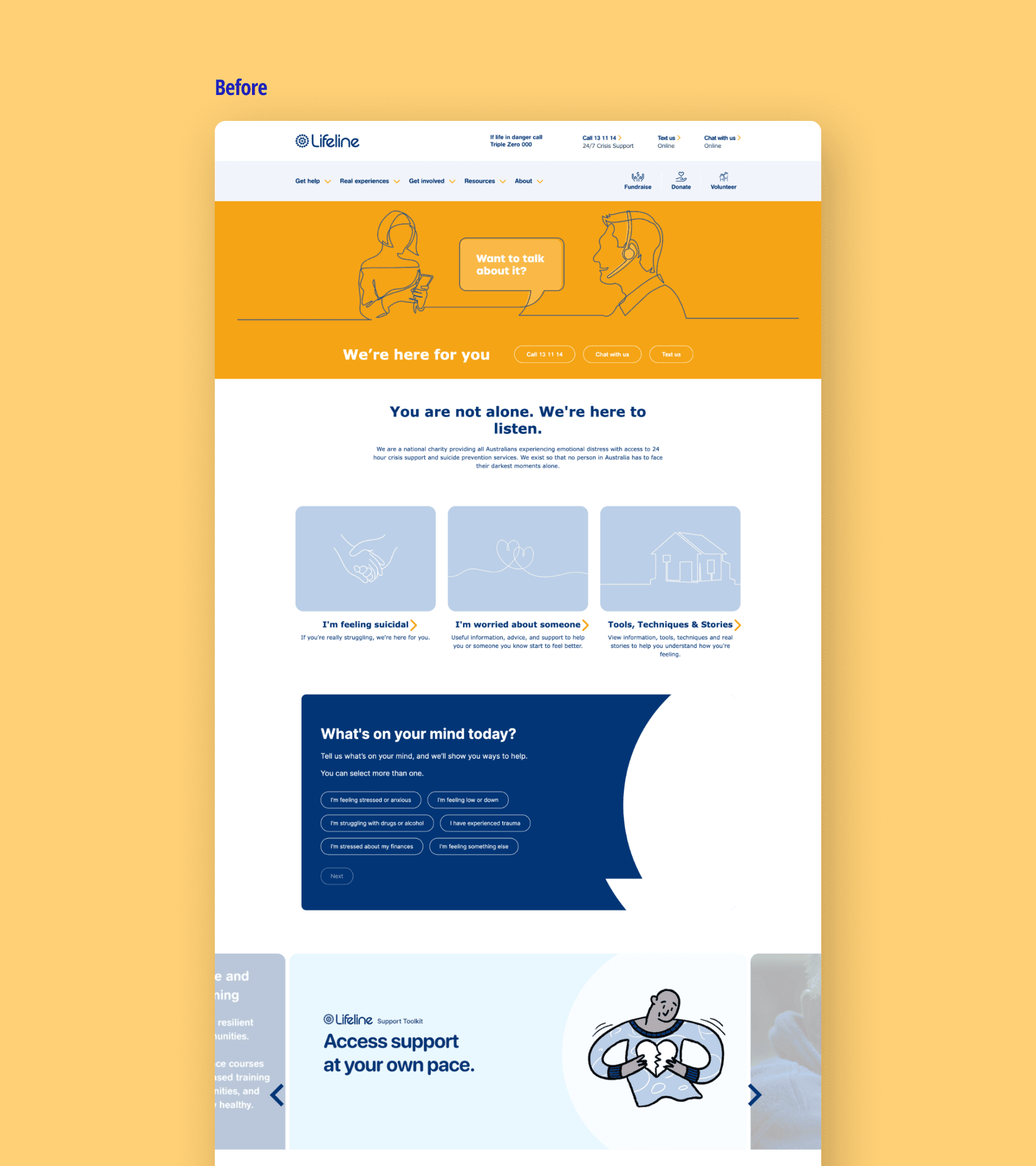
The website, however, had grown organically over years and did not reflect this. It struggled to clearly communicate services and support pathways and had a CMS nearing end of life.
At the same time, competing internal priorities created tension. Other departments within the organisation had differing strategic priorities for the website.
My role was to avoid undermining organisational needs whilst protecting clear user pathways for support.
Design strategy
1. Crisis support first
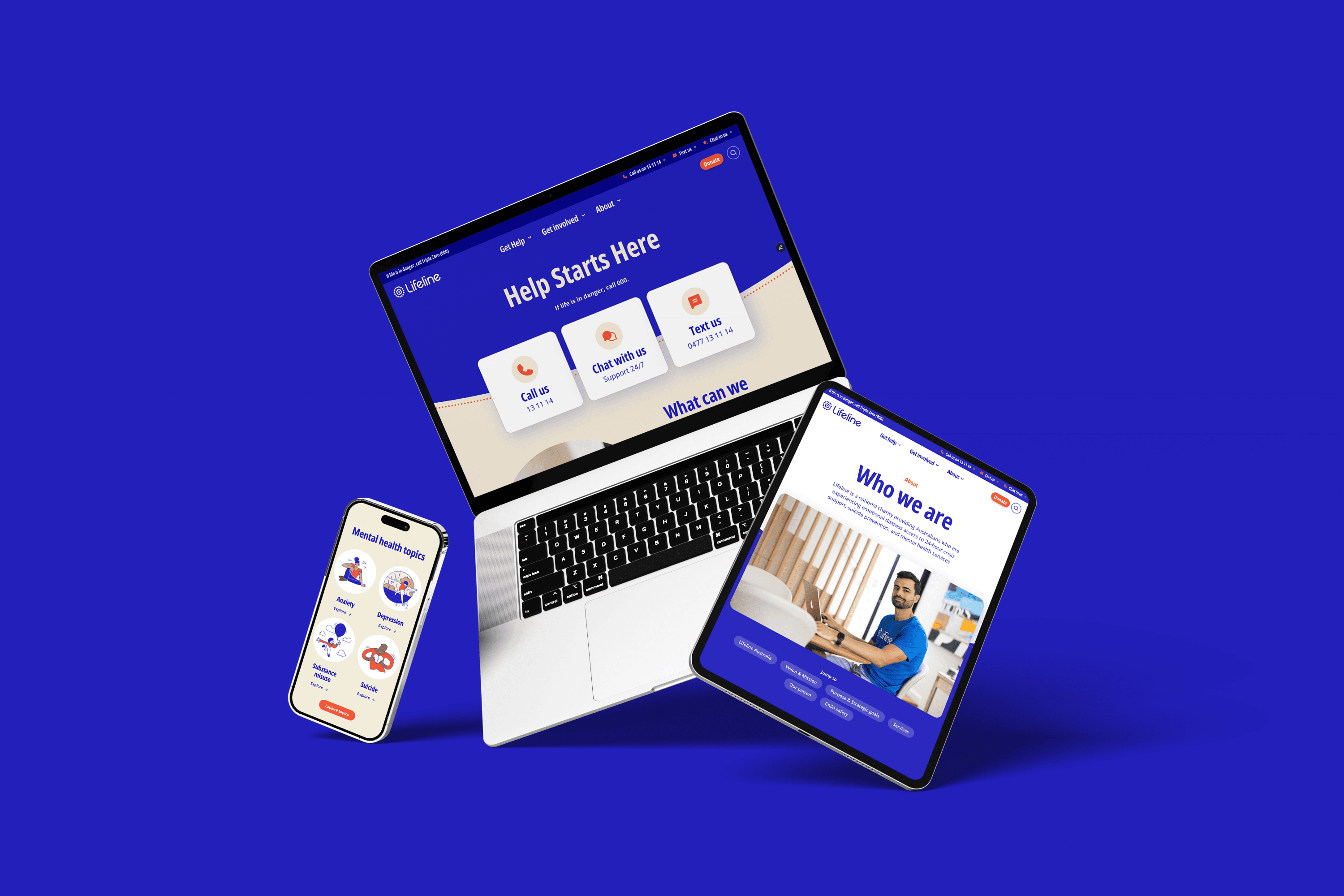
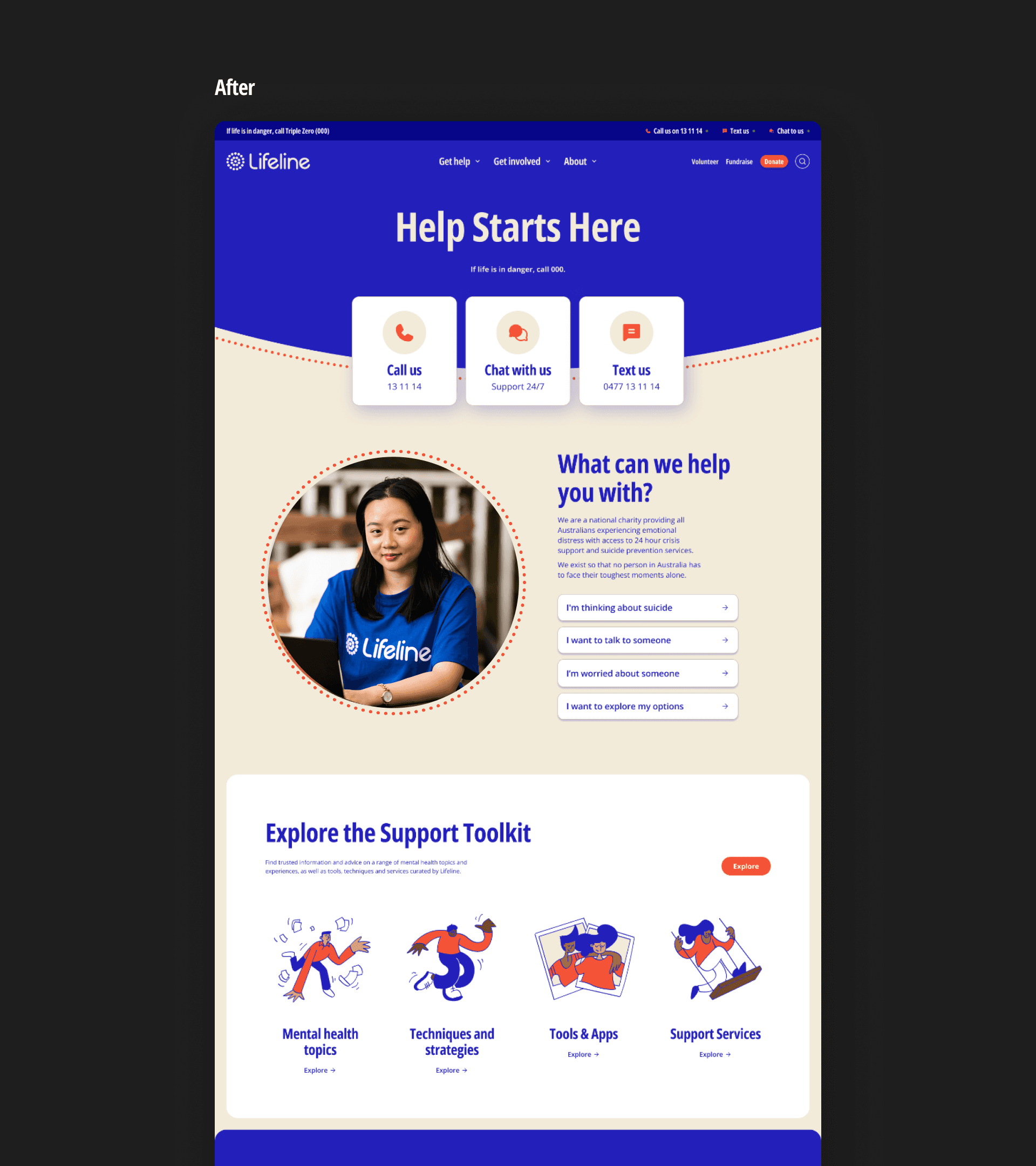
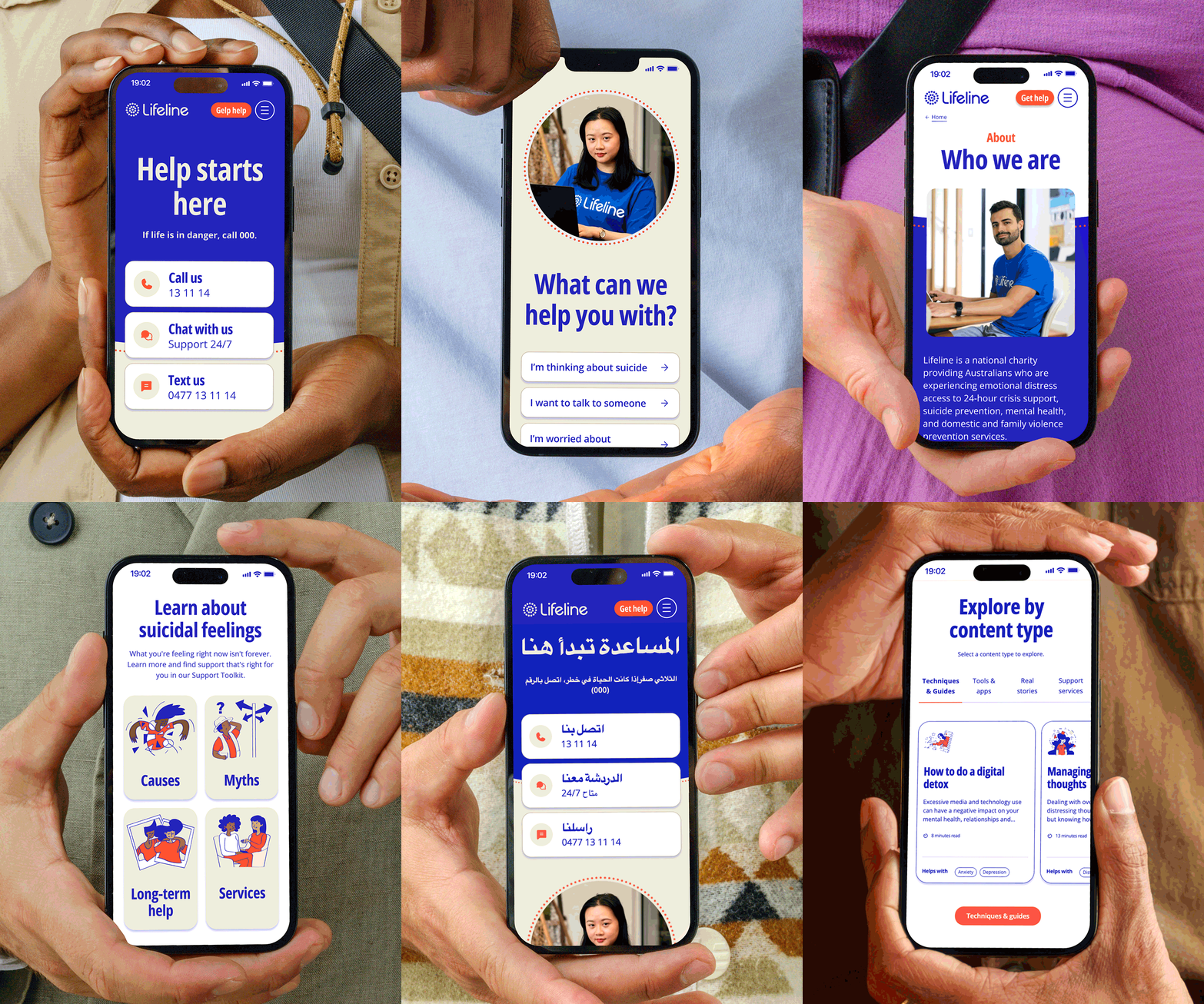
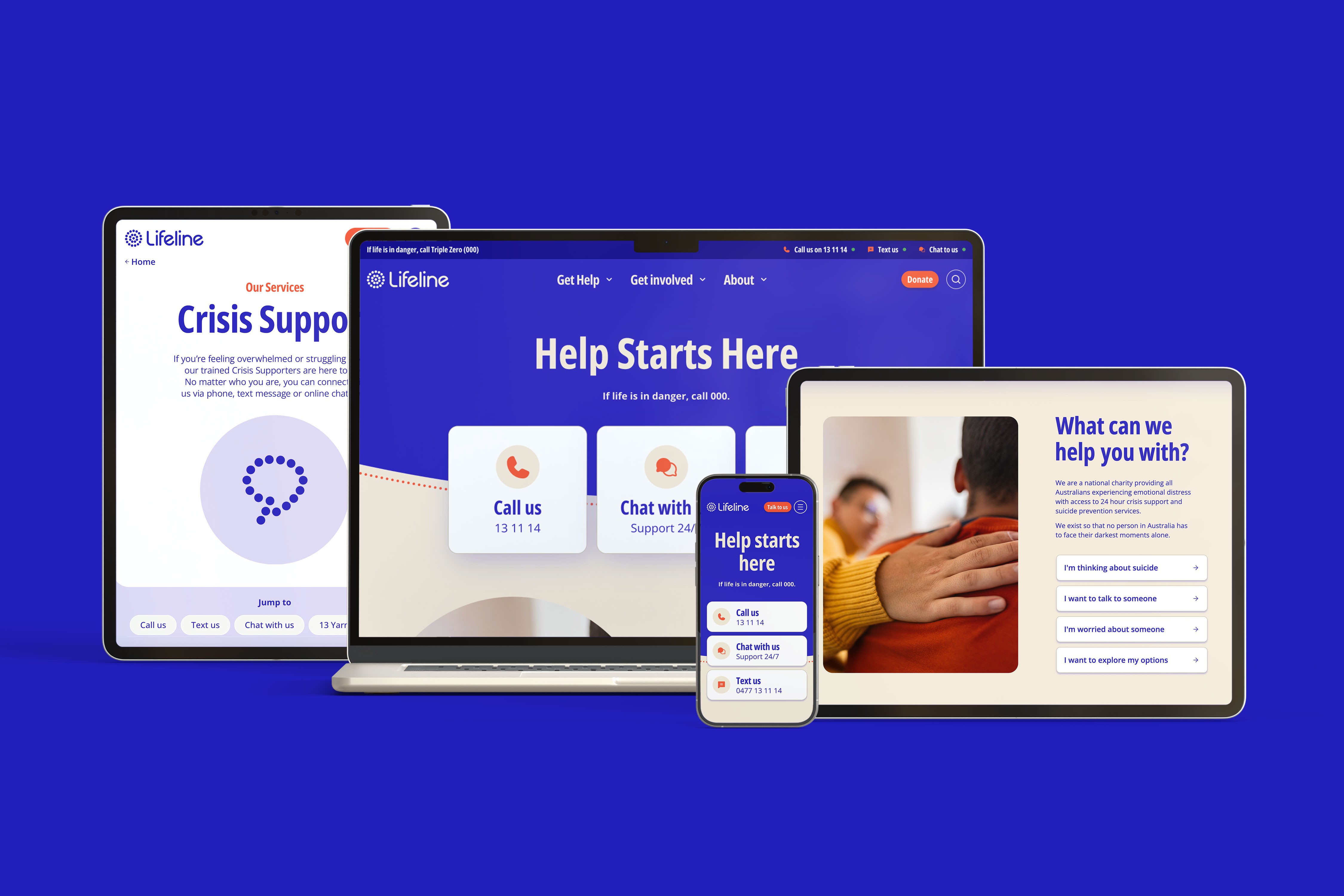
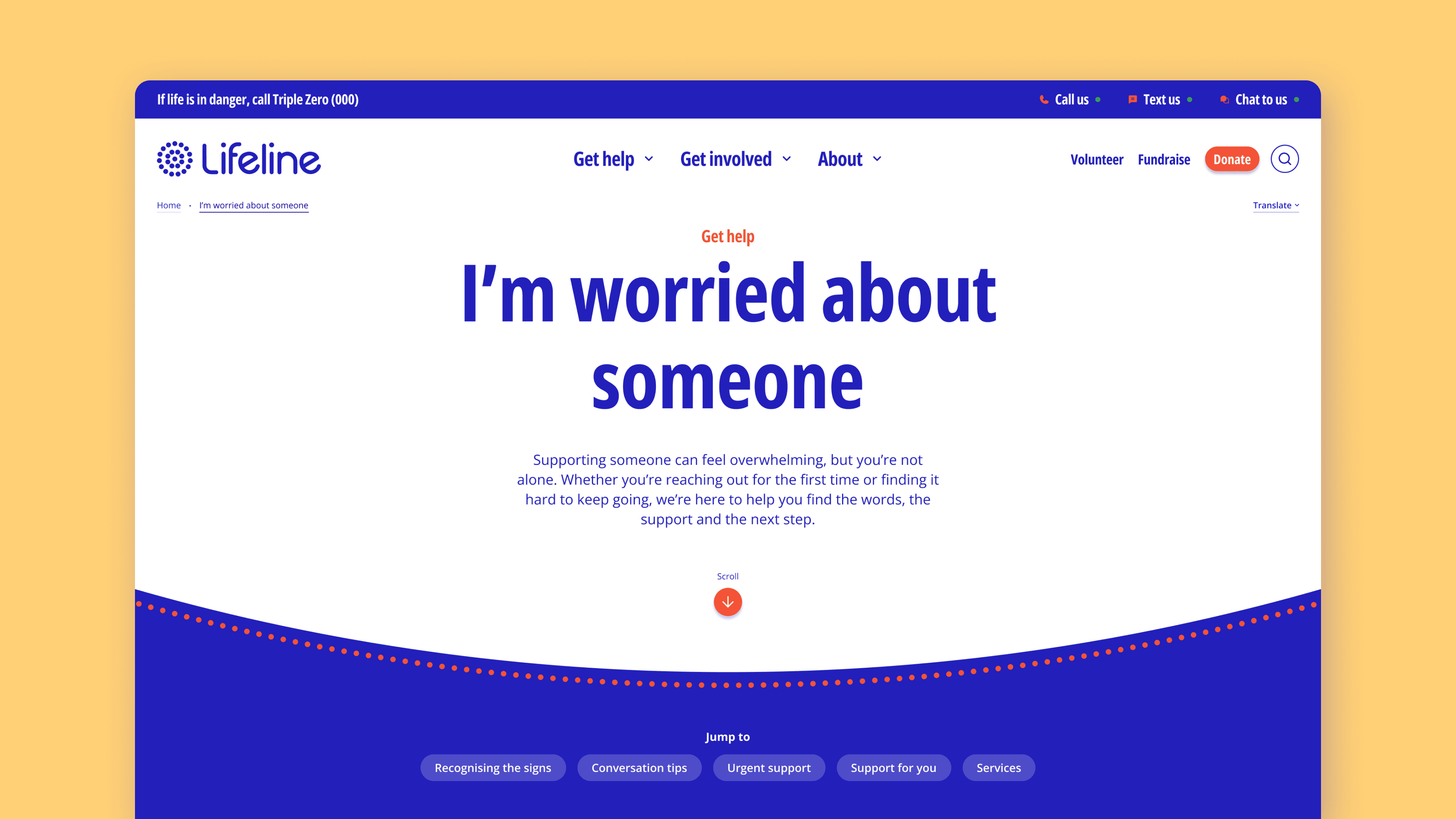
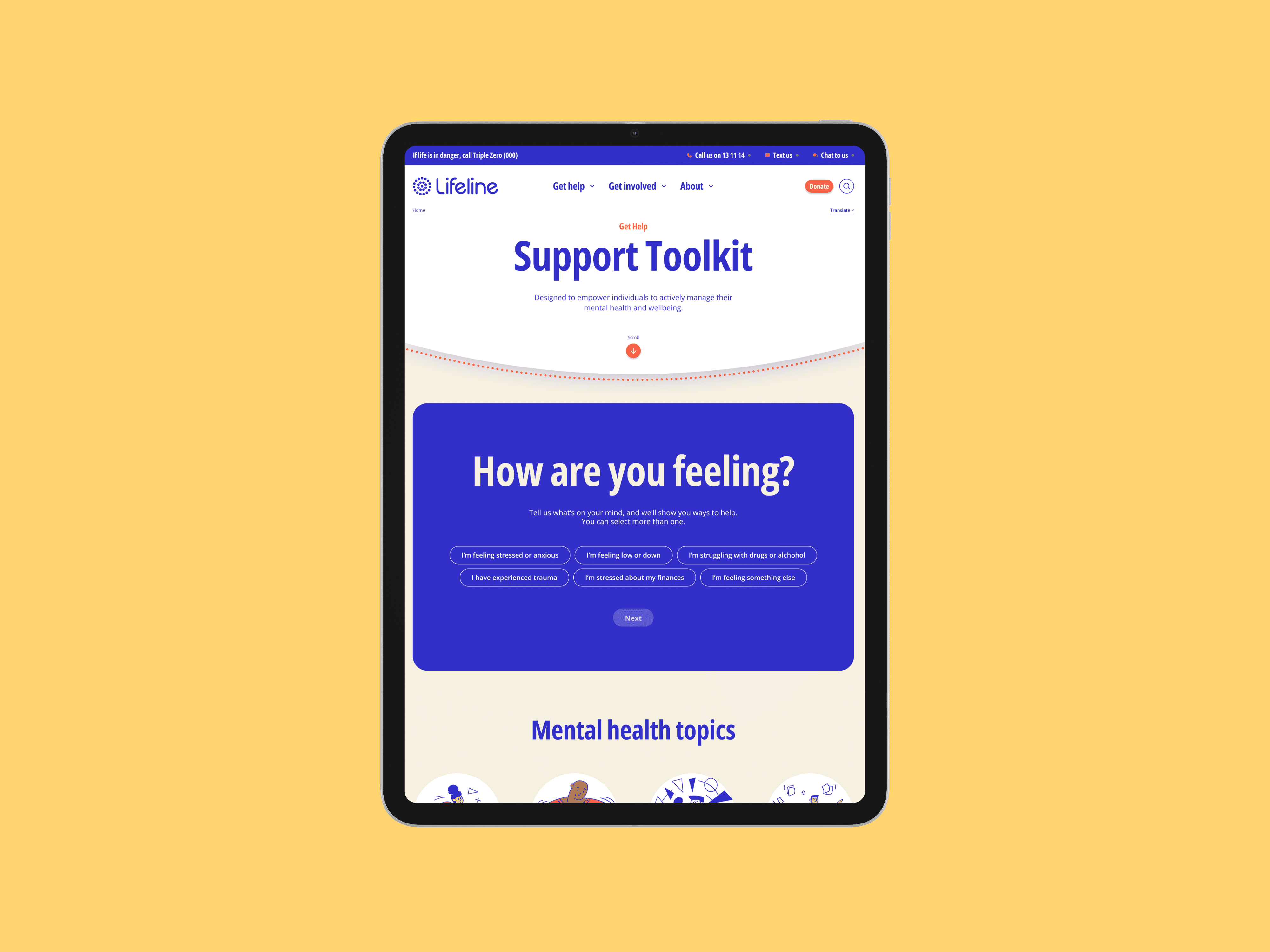
We established a non-negotiable principle: urgent help must be visible on every page. Call, text and chat pathways were designed in specific positions to remain persistent and immediately accessible, reducing friction for users in distress.
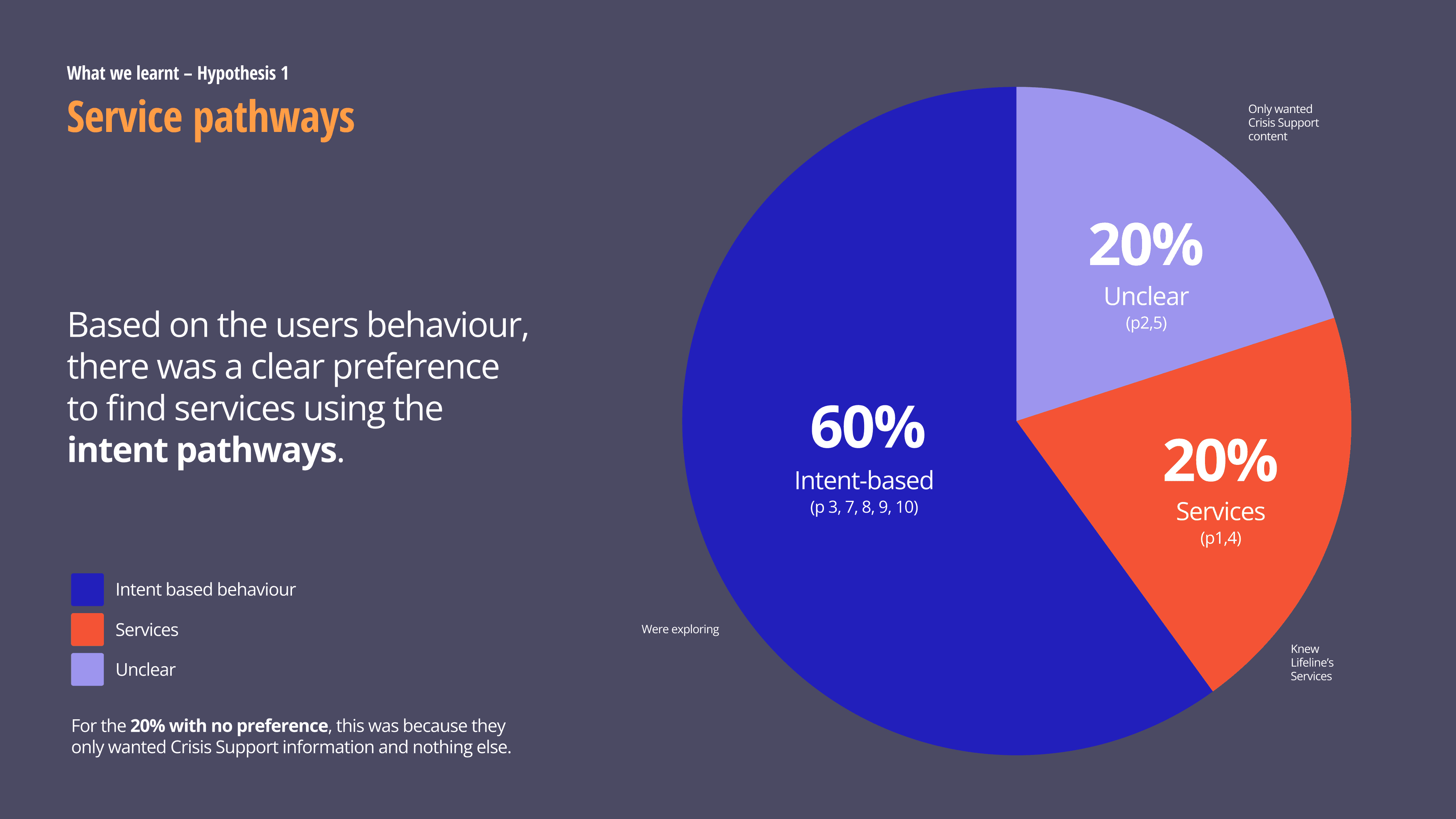
2. User intent over organisational structure
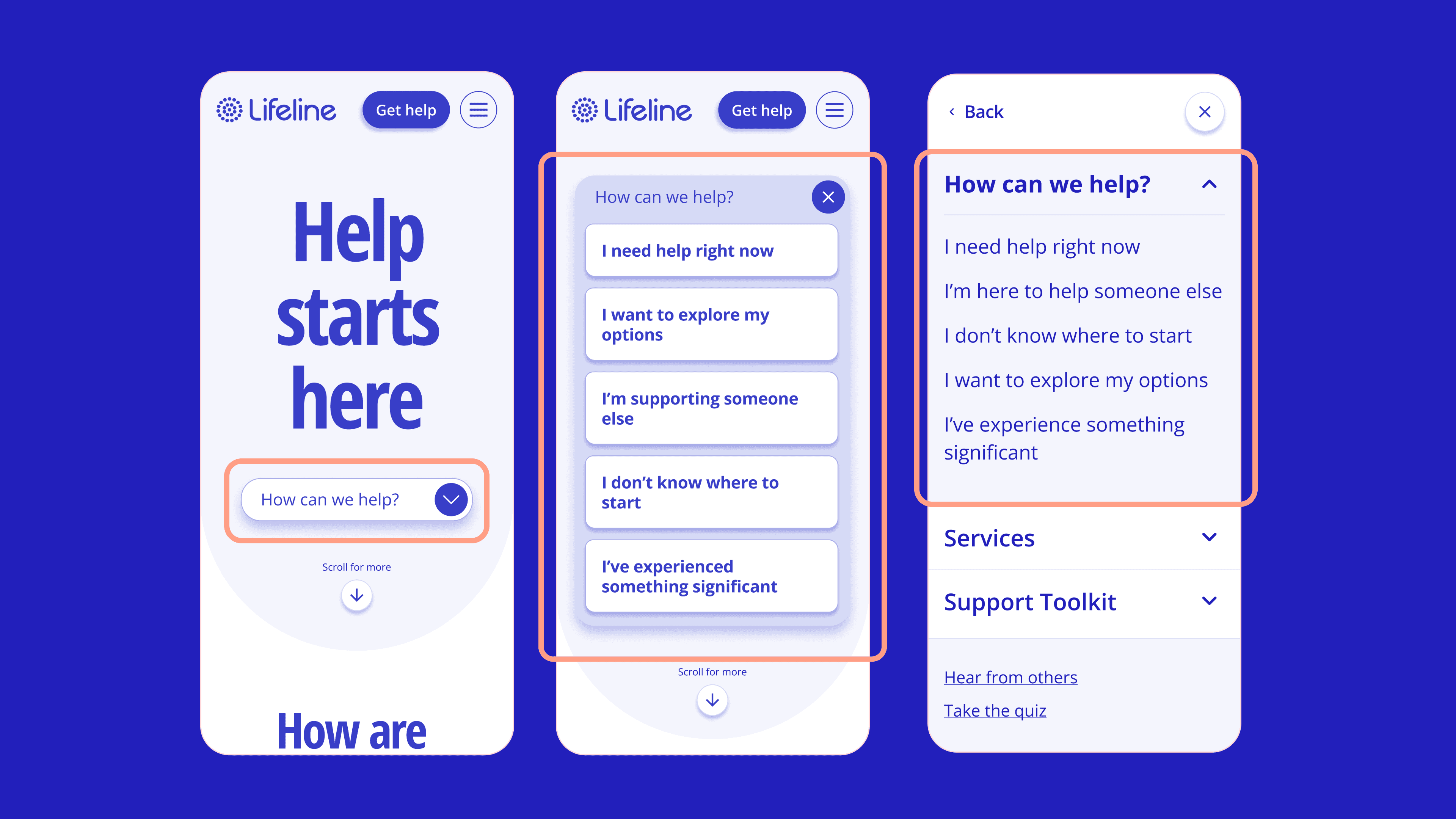
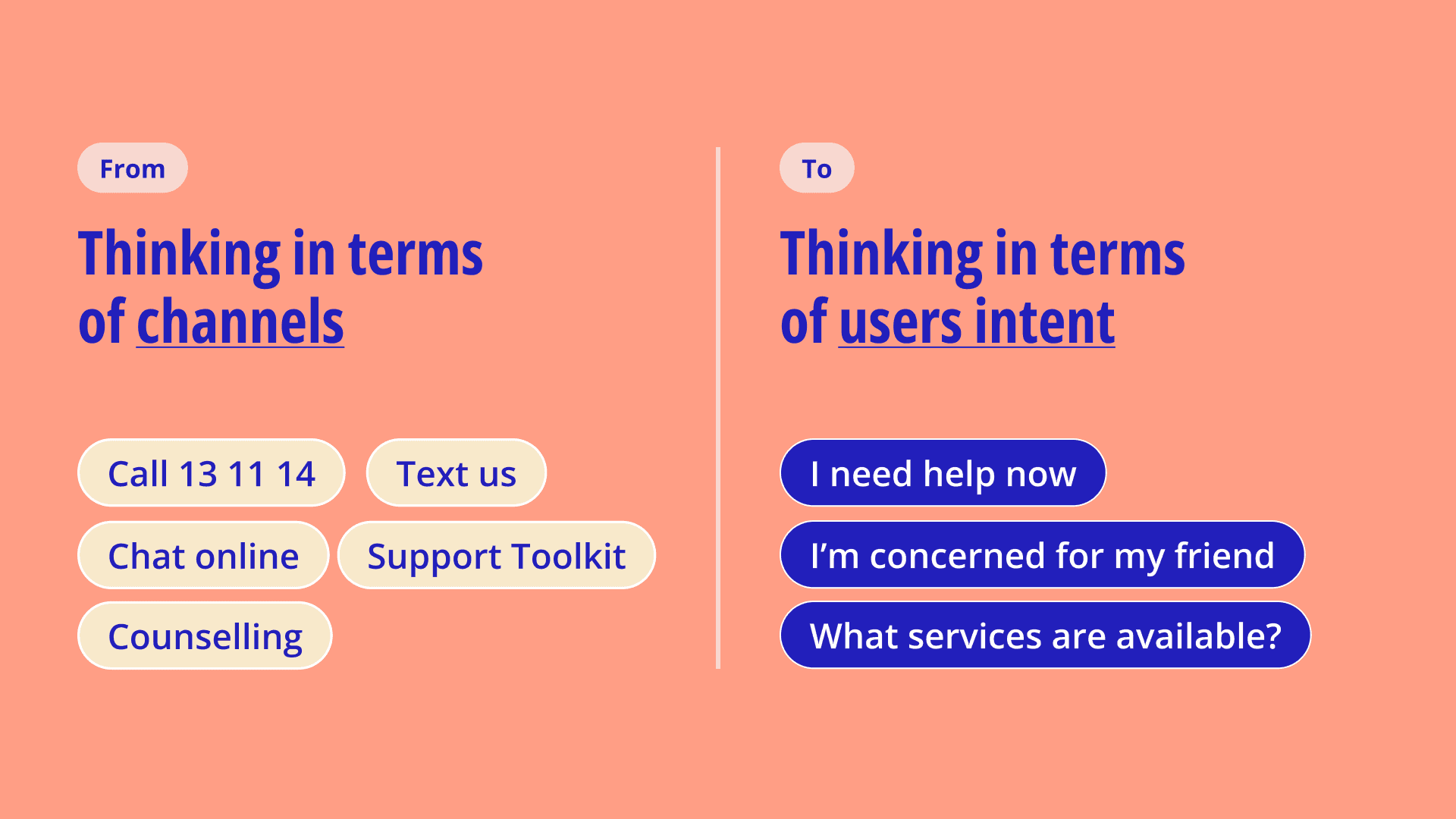
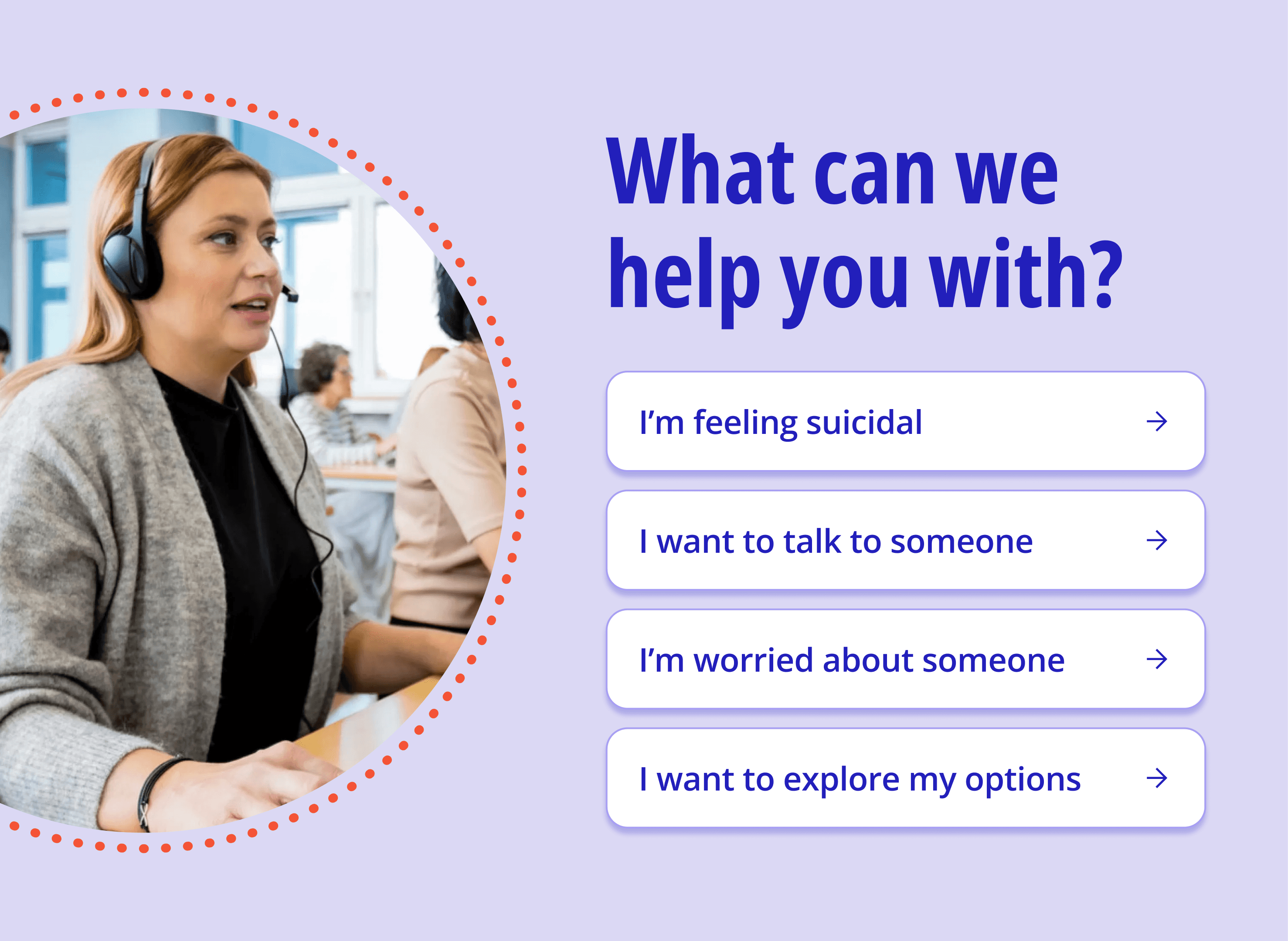
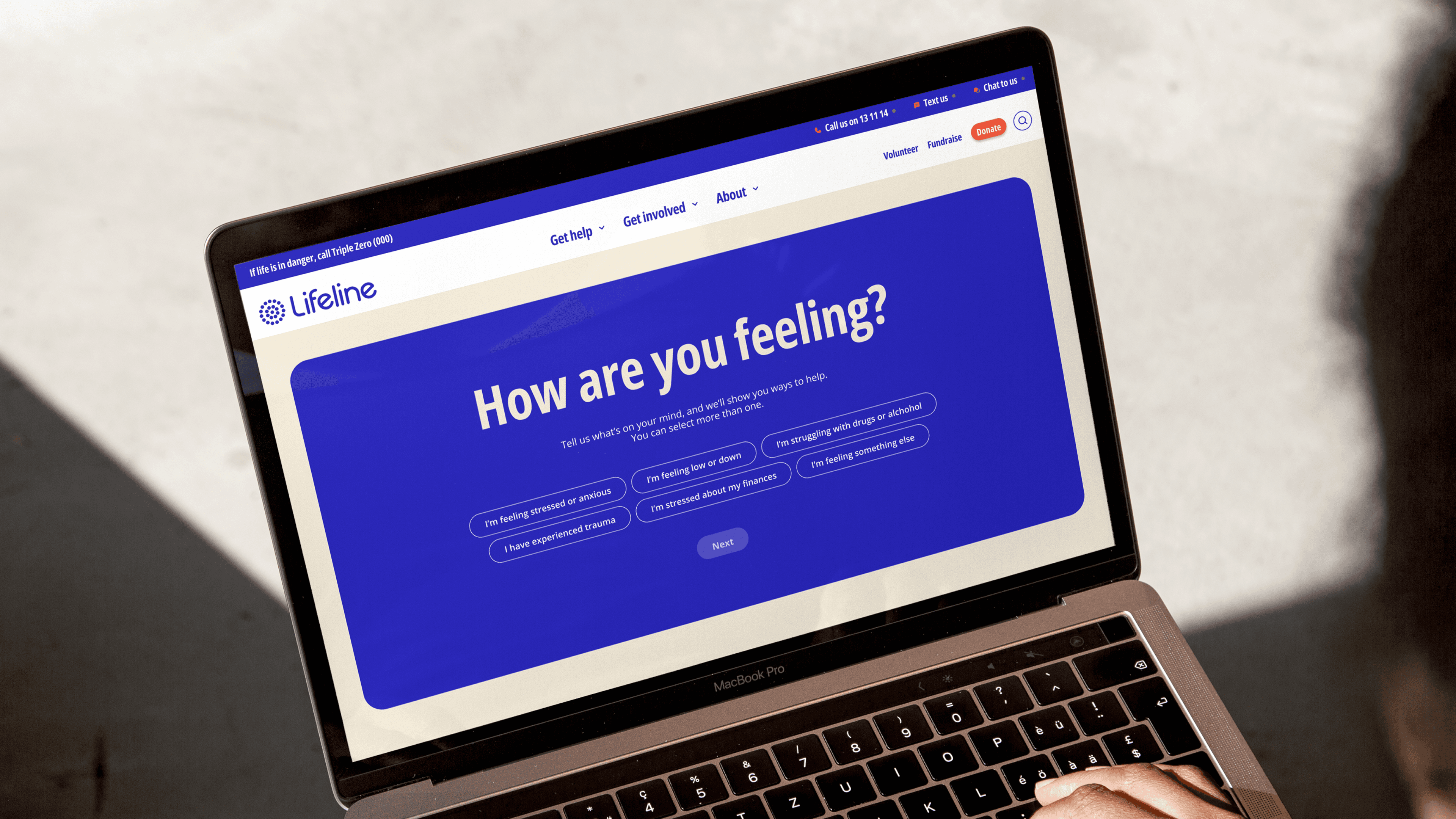
Internally, Lifeline is structured by service type. Externally, users arrive with feelings, not departmental knowledge.
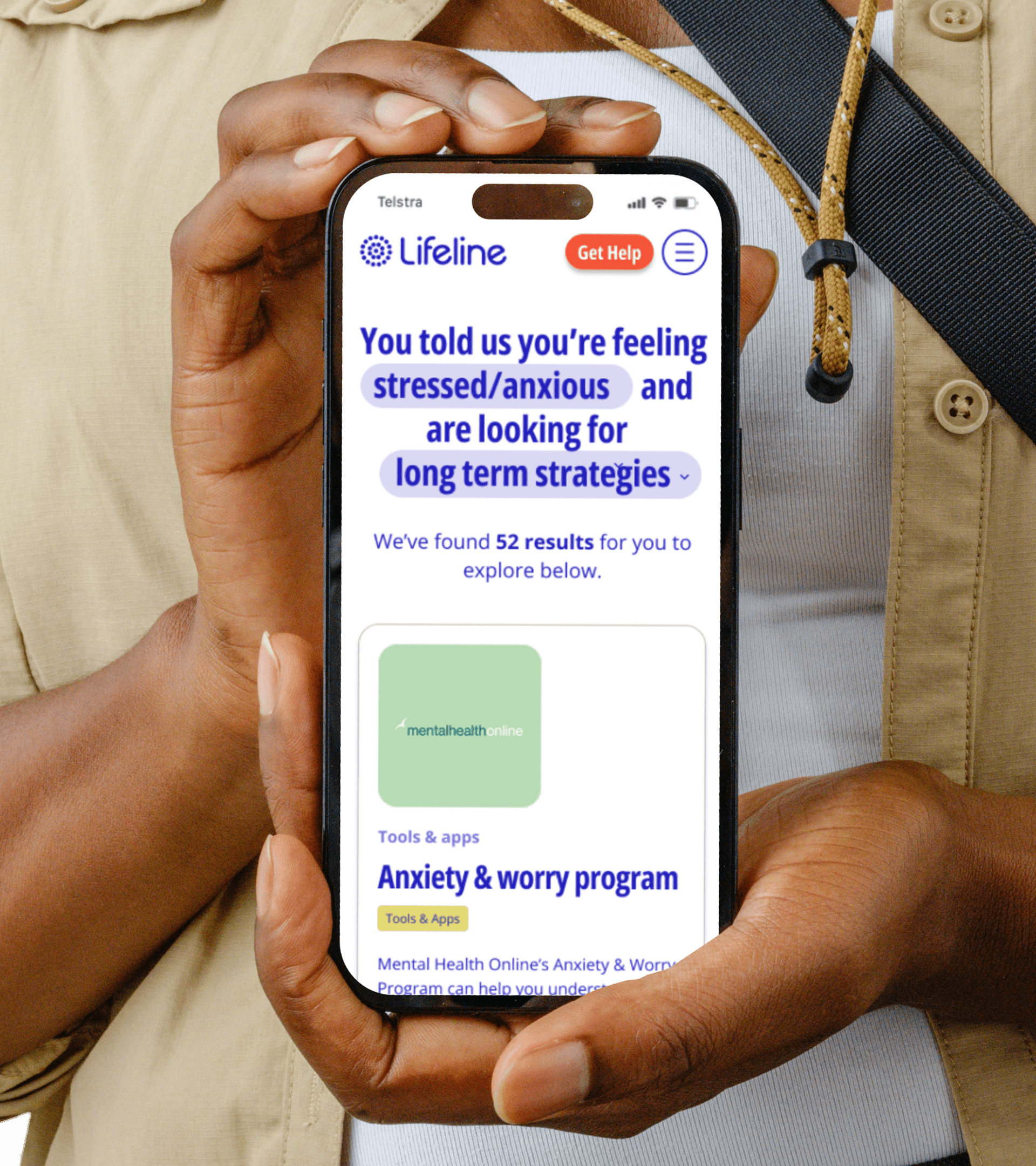
I conceptualised and led the creation
of user intent pathways.
This required:
• Rebuilding the IA from the ground up
• Navigating stakeholder and knowledge
and quality approvals
• Testing multiple interface treatments
of intent pathways
There were tense moments where
business priorities clashed, but ultimately,
the intent model was adopted and launched.
3. Repeatable systems, not individual pages Rather than redesigning pages, I built repeatable systems:
• A design operations process to align internal and external teams on the projects position
• A scalable component library
• A complete Figma system including design tokens for consistent implementation
• Governance and documentation in Notion
This allowed the platform to be scaled across the federated network and respond rapidly to emerging needs.
Execution
Working with Bliss Media, we chose to build the new site on Drupal 11.
Drupal 11 allowed us to architect modular content patterns that could be reused across 19 member organisations without duplicating structure.
The final platform delivers:
• Clear hierarchy for distressed users
• Simplified layouts that reduce cognitive load
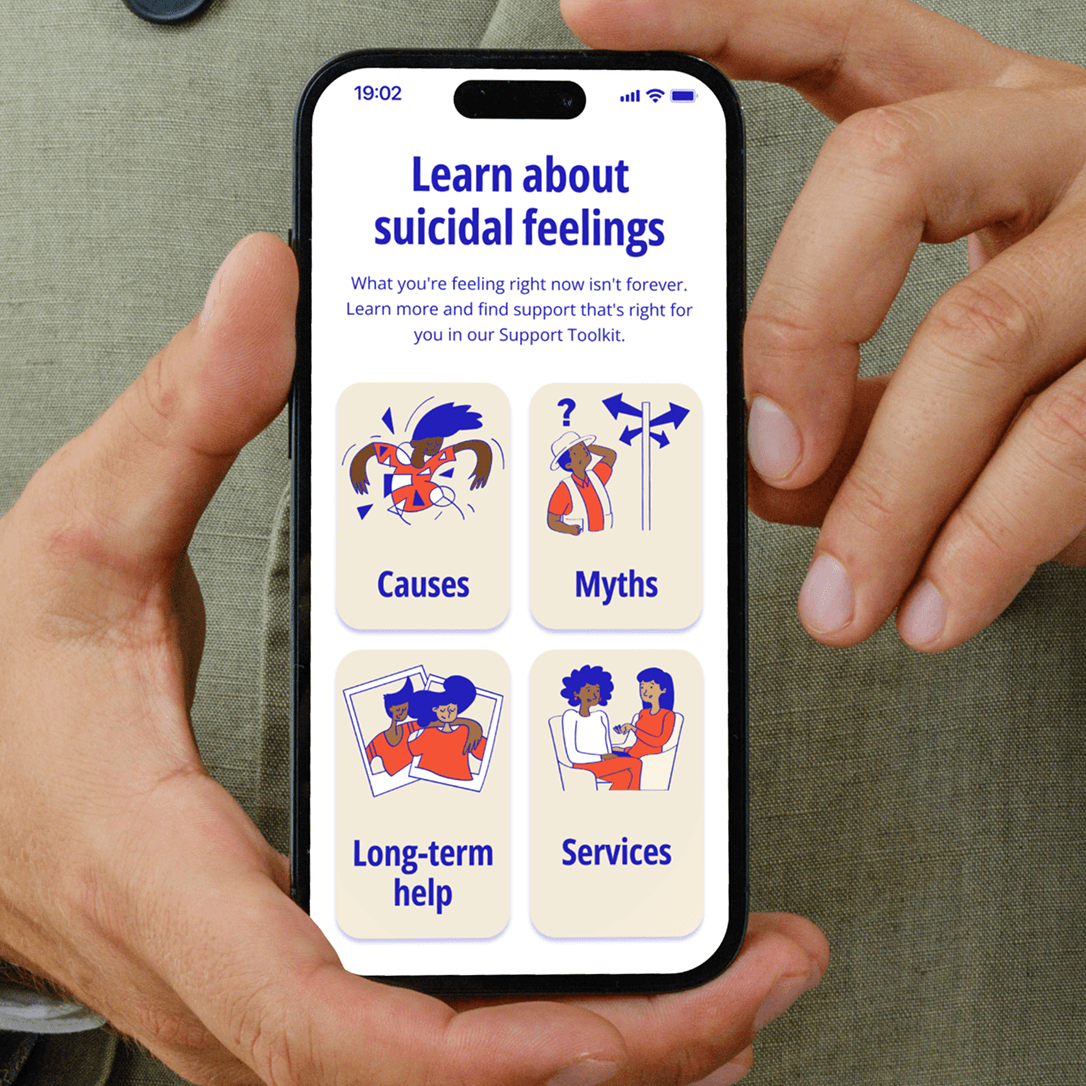
• Modular long-form content patterns
• A refined support quiz experience
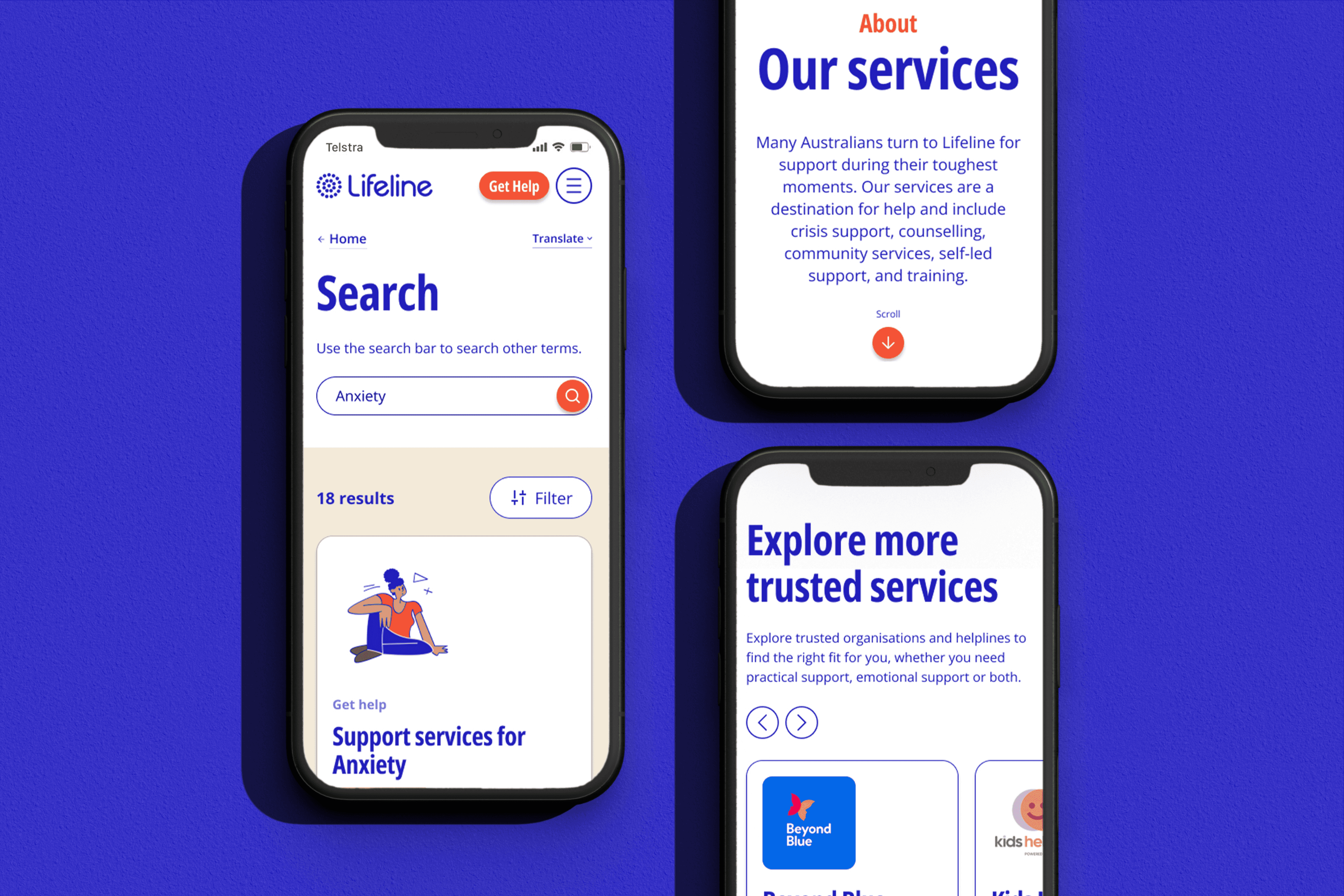
• Advanced search capabilities through clearer taxonomy and tagging
All UI decisions were reviewed and signed
off by me to ensure brand integrity and accessibility alignment.
I also attended user testing sessions,
hosted by Bliss Media, to observe behaviour and friction firsthand, using those insights
to refine patterns and pathways.

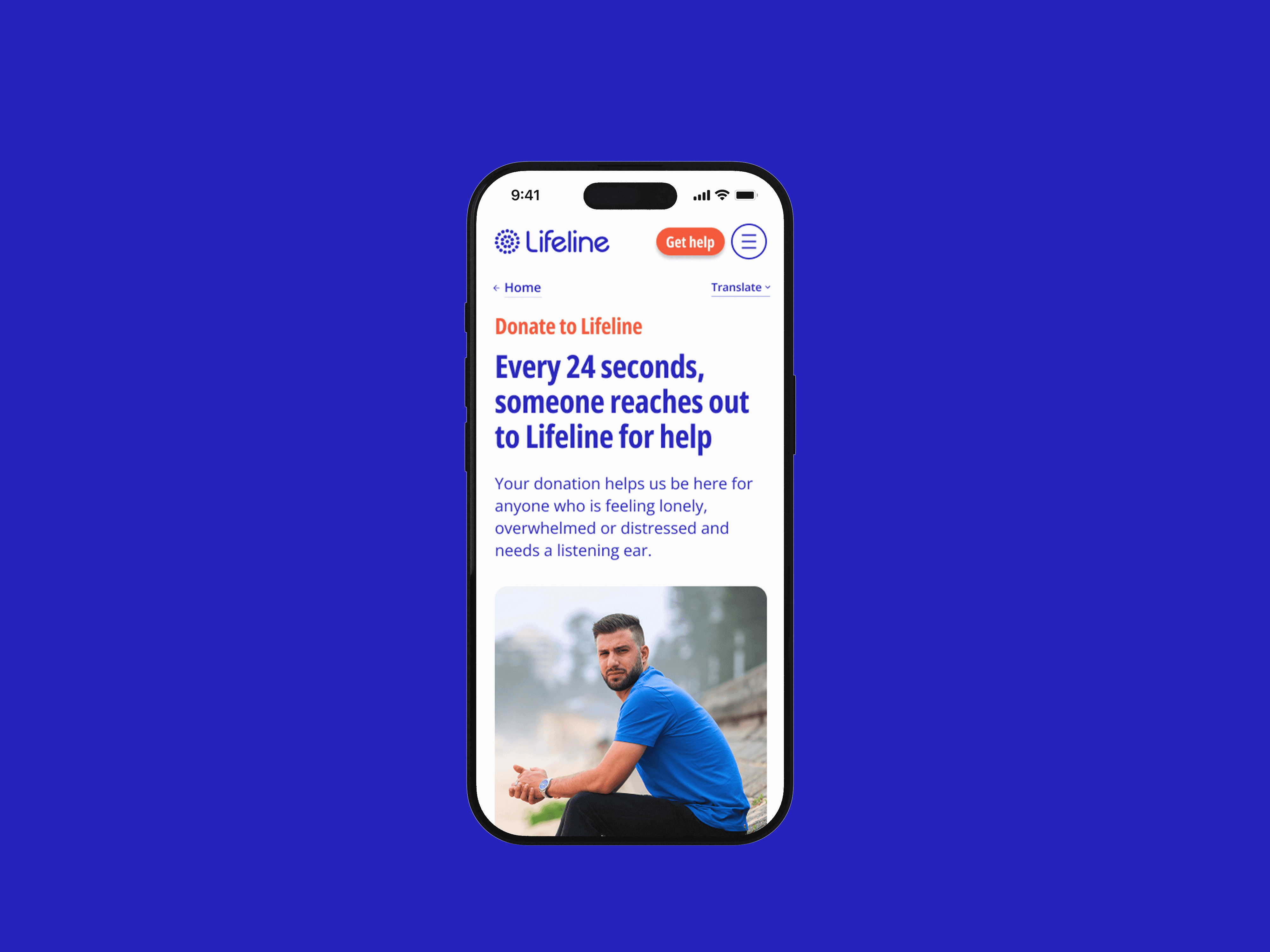
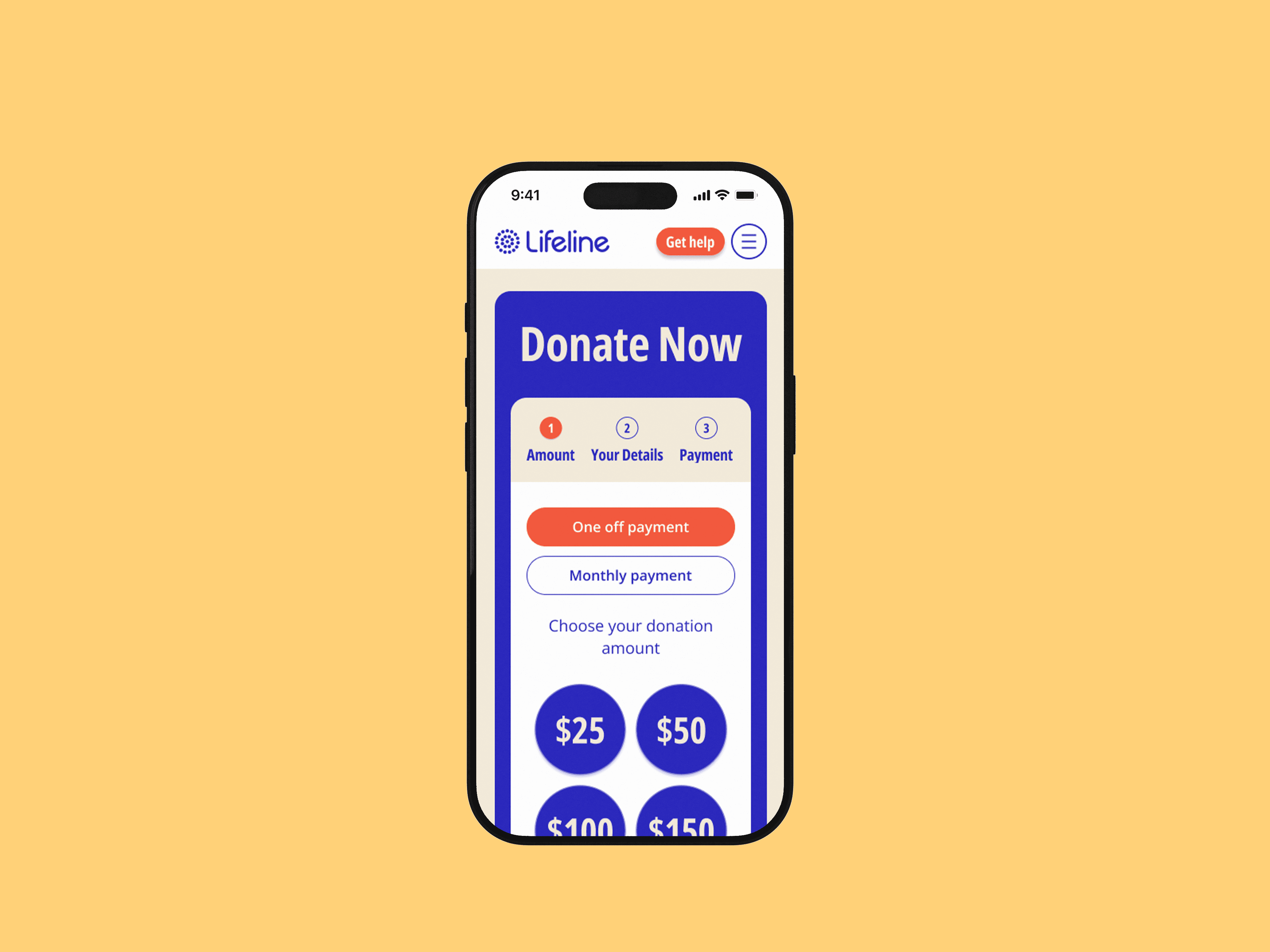
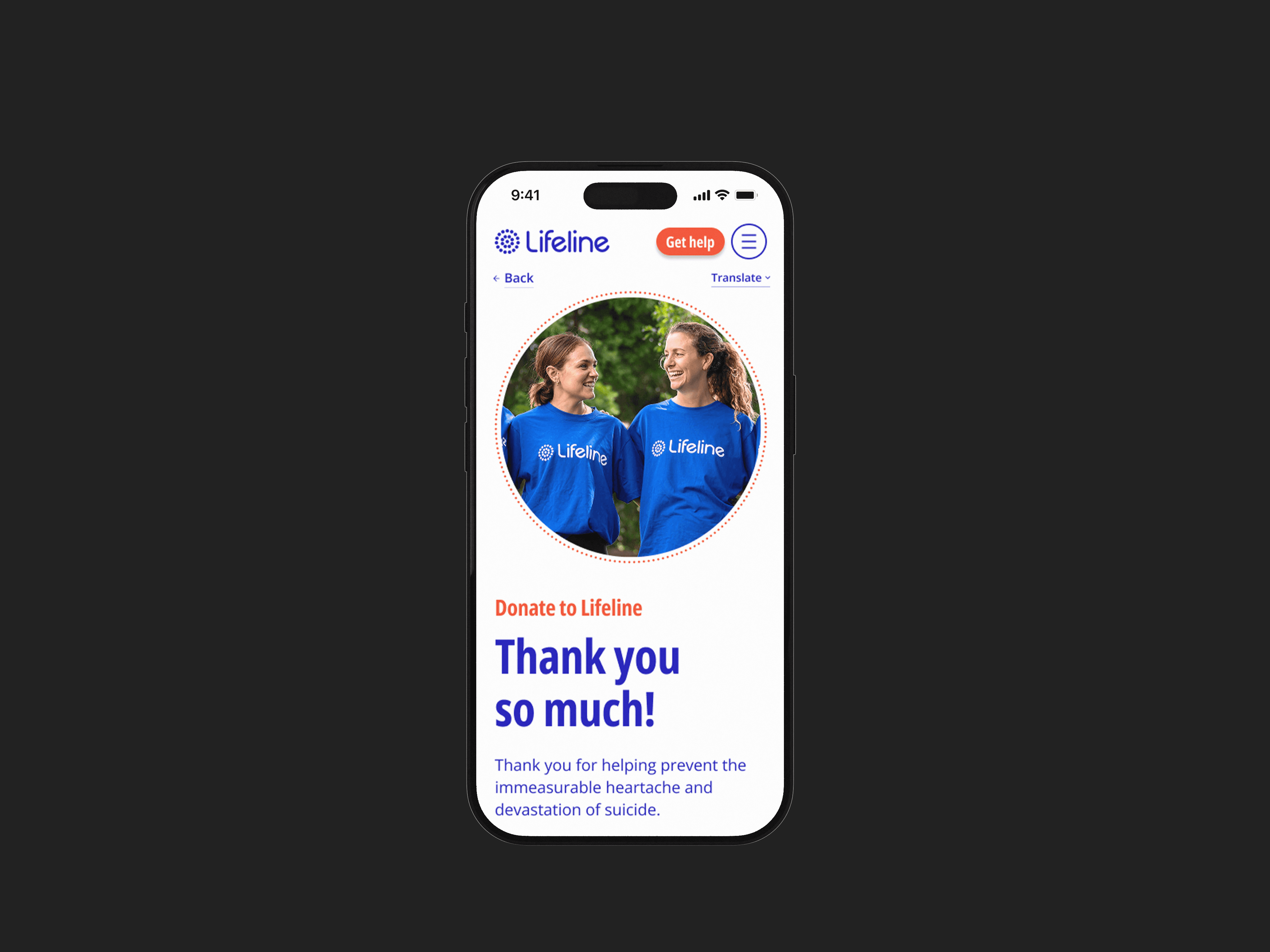
Real-World Validation:
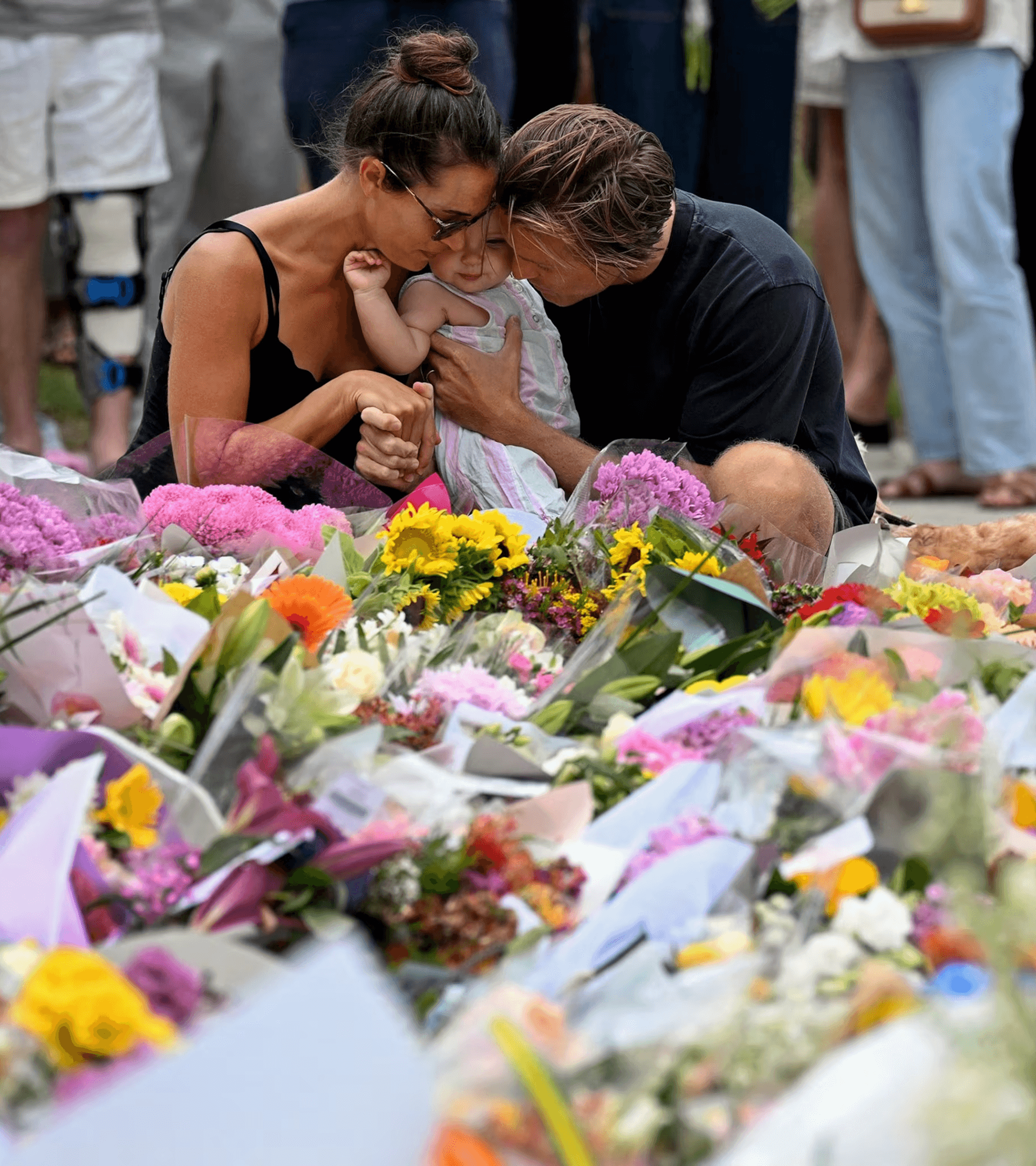
Bondi Beach Terrorist Attacks
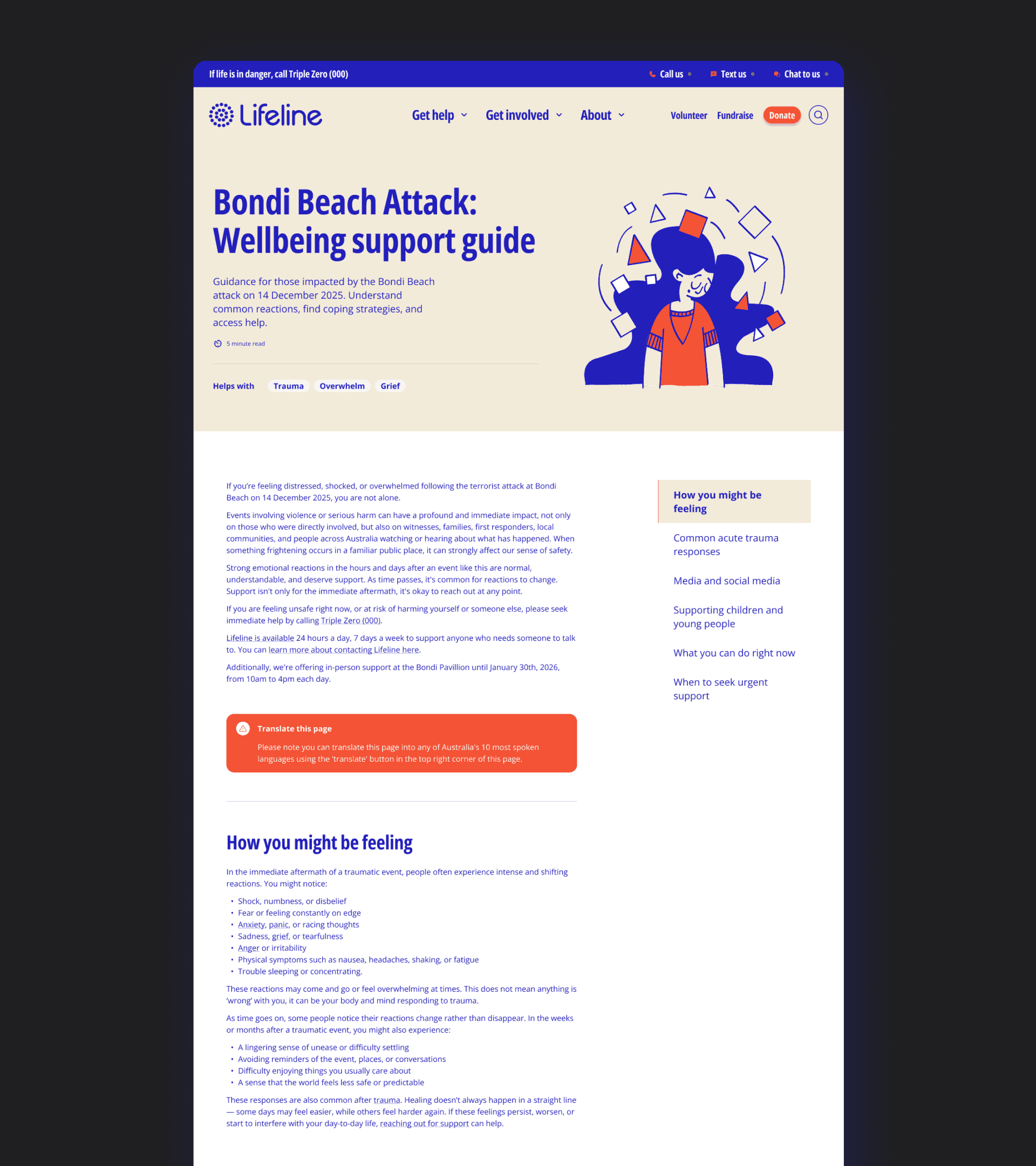
One of the core project goals was to create a system that could enable the Lifeline teams to respond to events in real time.
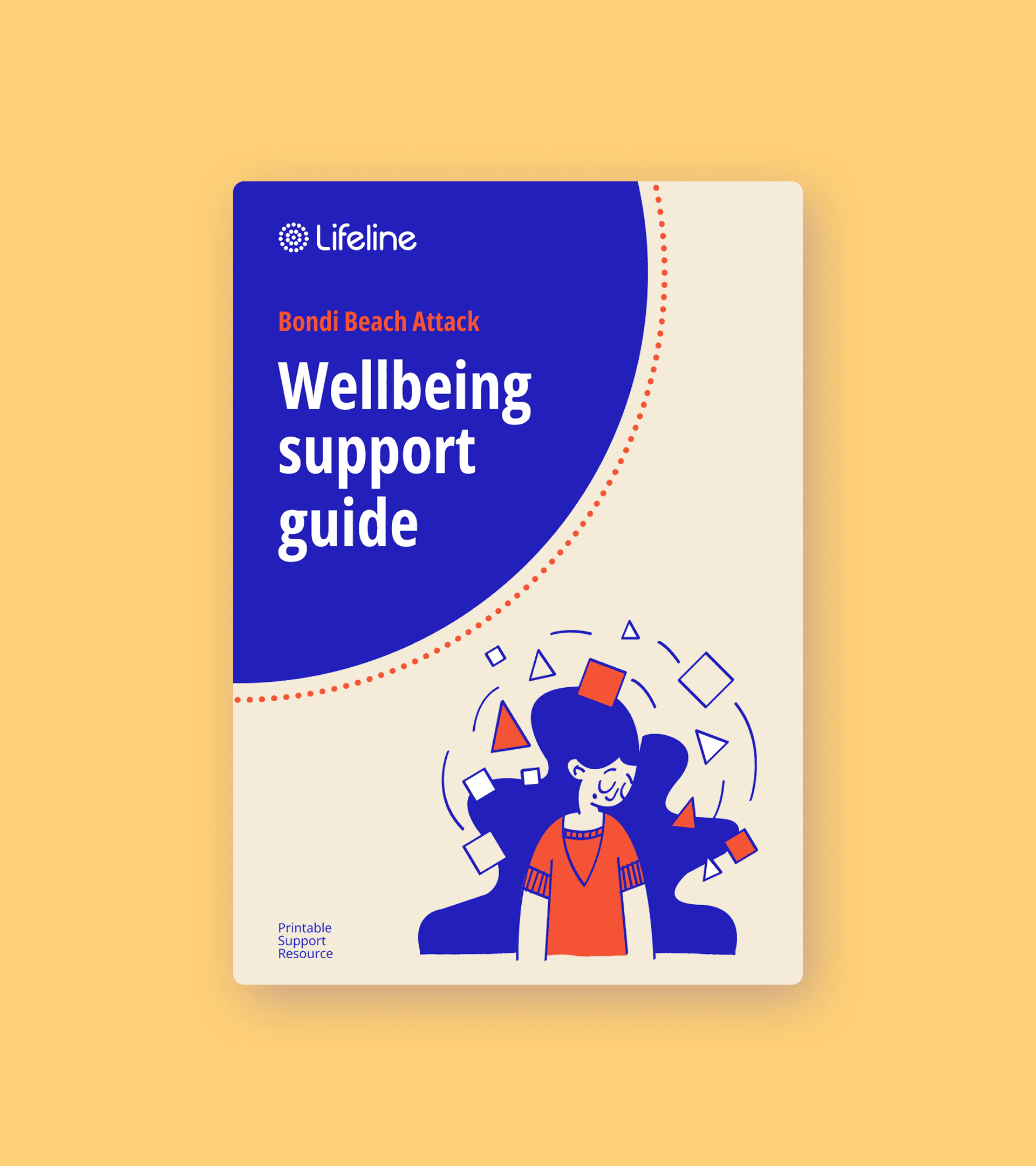
Within hours of the Bondi Beach attack, Lifeline teams were able to design, publish and distribute a dedicated support guide using the new modular system, with:
• 25,000+ visits to the online guide
• 5,000+ printable resource downloads

Responsibility and longevity
Ensuring the site could be used by as many people as possible was at the heart of our strategy. This included:
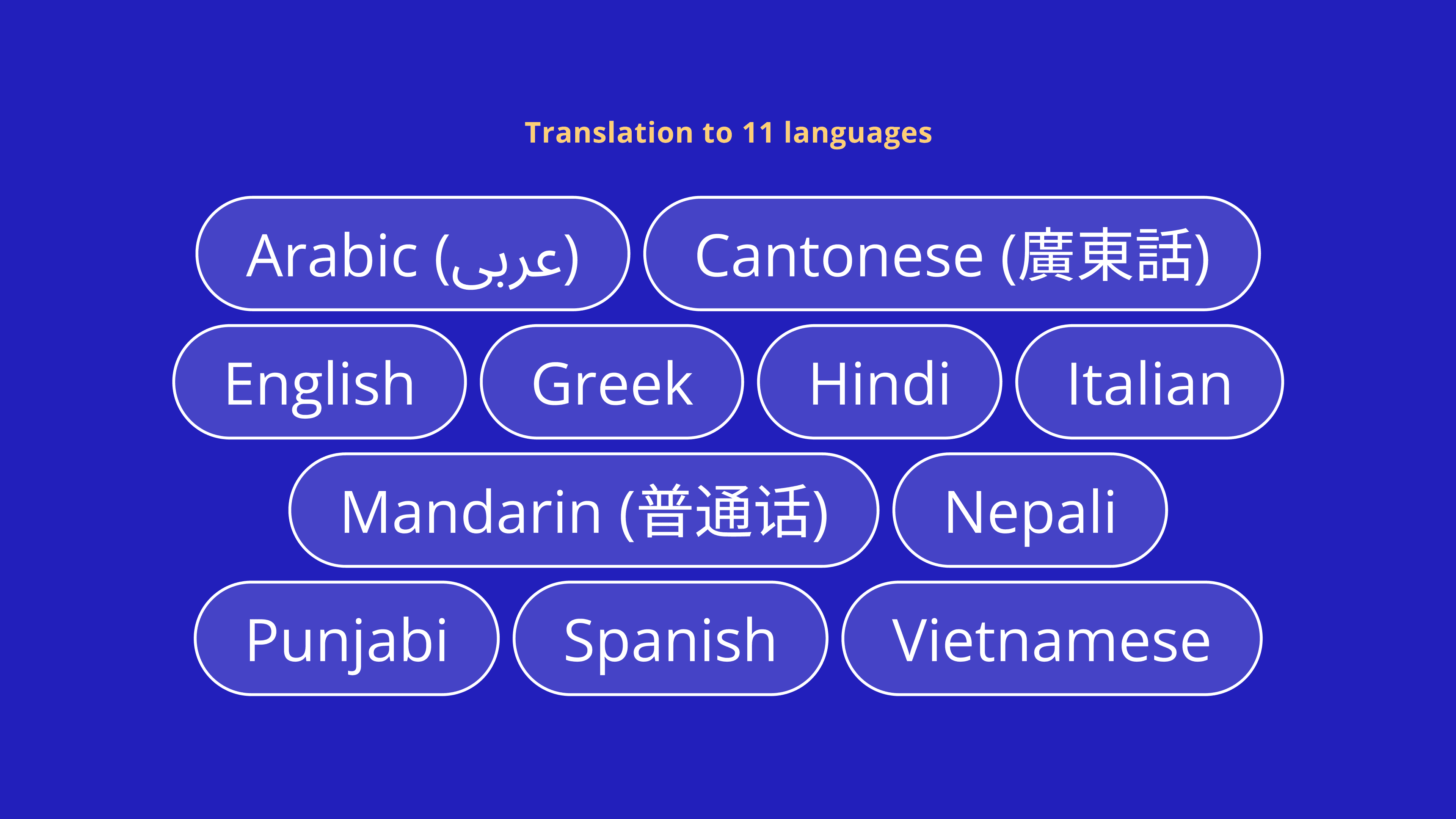
• Instant translation across the 10 most spoken languages in Australia
• Accessibility audits with real users, going beyond compliance
• Design system adoption by additional member organisations
• Delivery of the platform 15% under budget
The result is not simply a redesigned website, but a scalable digital foundation supporting Lifeline’s evolving services and member organisations.